The Grand Archives
Explore our collection of 85 board games
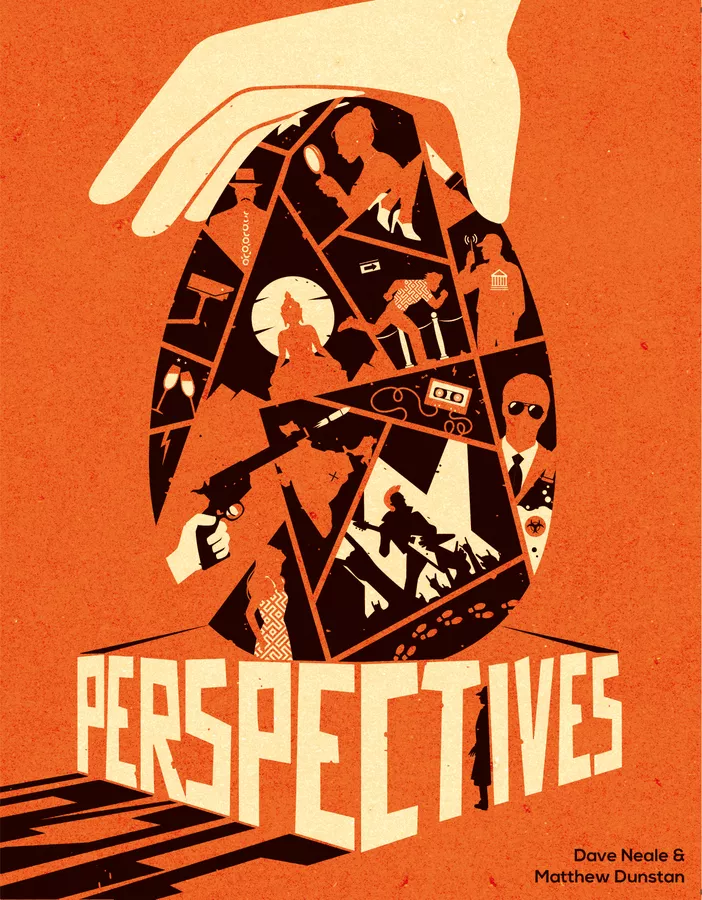
Perspectives
In Perspectives, each player holds key information for piecing together what has happened and finding the solution. Three cases, each in four acts. Cross-reference photographs, reports, and clues... without looking at the documents of your team players! Will you find the details connecting all the pieces of the puzzle? WORK TOGETHER TO SOLVE THE CASES! The three scenarios: THE NAGARAJA - CASE 1: India - Museum – Theft THE DREGS - CASE 2: California - Rock music – Poison FROM BUENAVISTA WITH LOVE - CASE 3: South America - Gangs – Murders
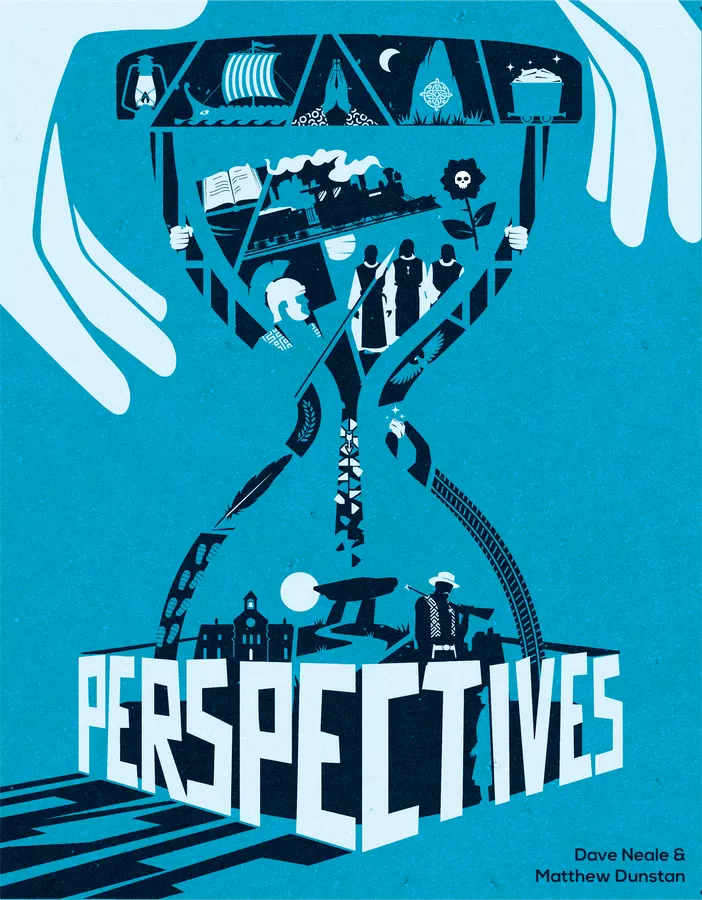
Perspectives Blue
Dive back into investigation with the new standalone box of Perspectives, the cooperative investigation and shared information game, and discover three new investigations that will take you through history. In Perspectives, each player holds key information in the form of photographs, reports and other clues. Work together, share your information and solve the three investigations that are waiting for you to solve.
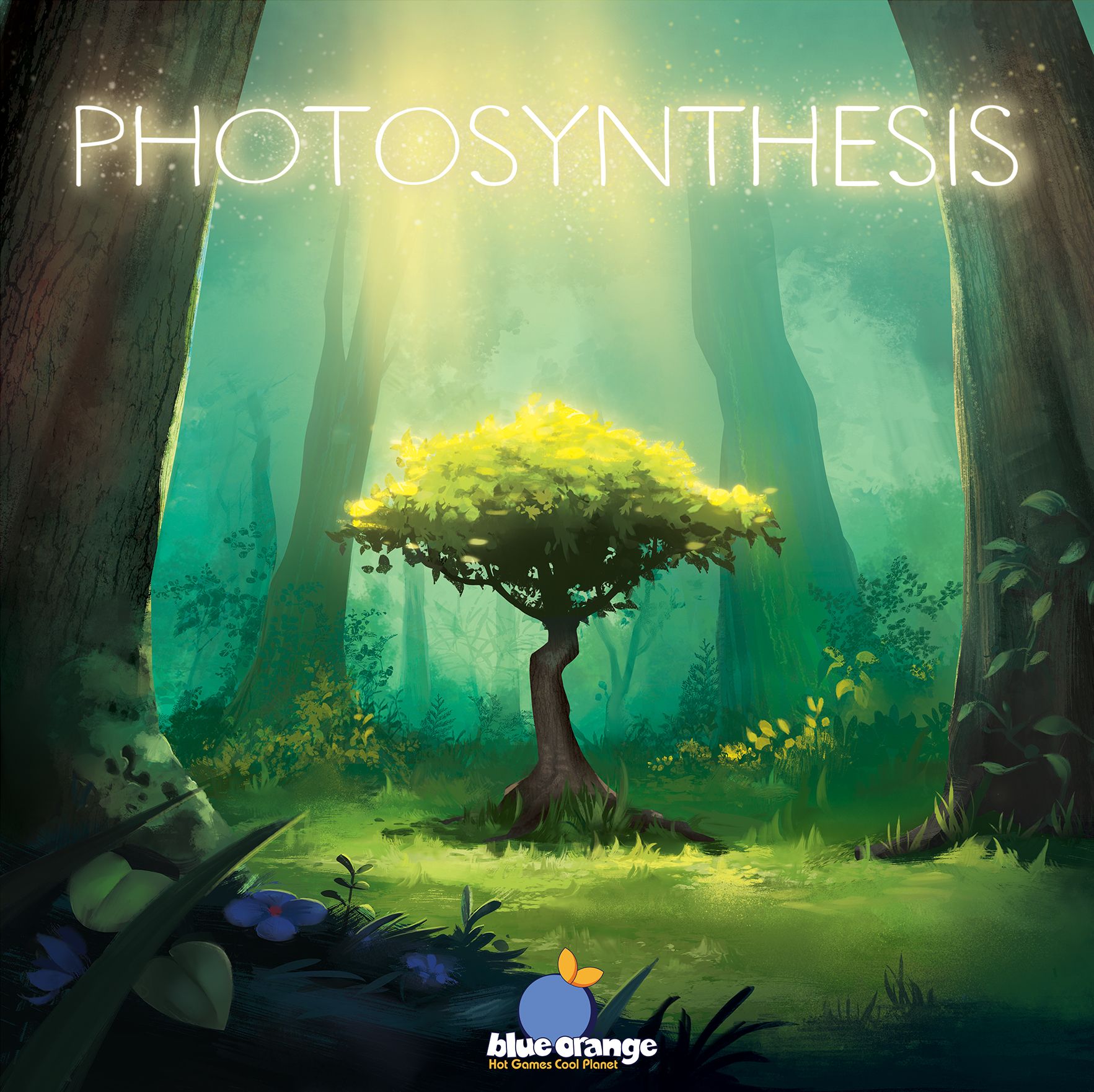
Photosynthesis
The sun shines brightly on the canopy of the forest, and the trees use this wonderful energy to grow and develop their beautiful foliage. Sow your crops wisely and the shadows of your growing trees could slow your opponents down, but don't forget that the sun revolves around the forest. Welcome to the world of Photosynthesis, the green strategy board game!

Piles! A Fast-Paced Free-For-All
Piles is a fast-paced set collecting game designed for kids and families. If you enjoy classic games like Speed and Spoons then you’ll love this easy to learn free-for-all. In Piles you can play up to 8 players or even face off 1-on-1 for a fun two-player experience. You'll be matching sets of clothing by swapping cards through a universal discard pile. Average playtime is under 10 minutes making the game highly replayable and addicting. This portable card game is ideal for any occasion.
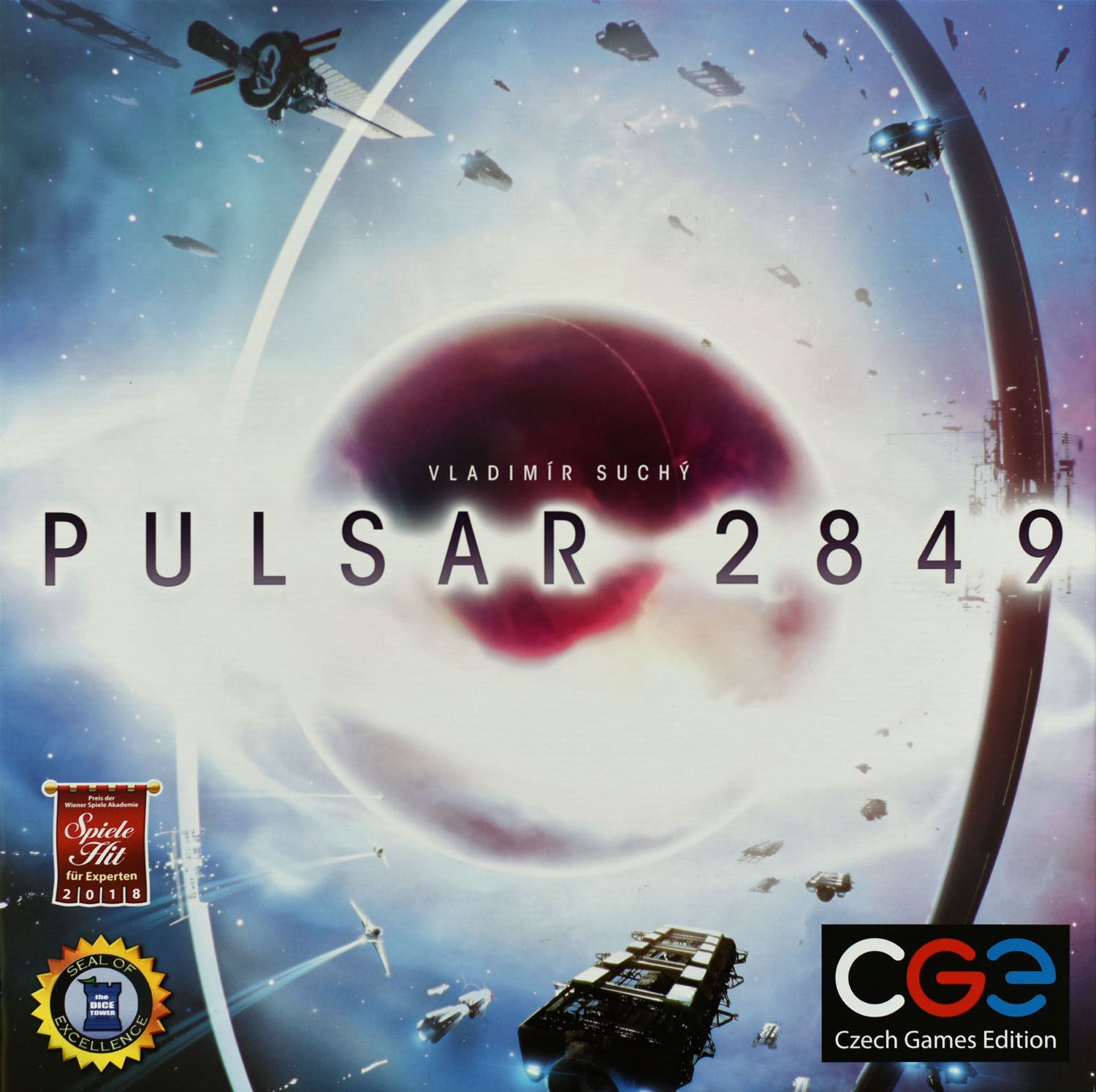
Pulsar 2849
It is the year 2849, and humanity has harnessed the power of the pulsars. Now we must find a way to distribute this power throughout the stars. In this Euro-style game, players explore space, claim pulsars, and discover technologies that will help them build energy-distribution infrastructure on a cosmic scale. Dice are used to purchase actions, and players choose their dice from a communal pool. There are many paths to victory so you can blaze your own trail to a bright future. Draft dice to explore the universe in Pulsar 2849. Game is only 8 rounds long. Each round, roll dice based on the number of players, sort them based on their values, then draft dice to take actions. Possible actions □ Fly your survey ship □ take a Gyrodyne □ Develop a Pulsar □ Build one or more energy transmitter vectors □ Patent a technology □ Buy a dice modifier □ Complete a special project in your HQ and unlock Gate Run Players score points each round based on what they've discovered and explored, and everyone has common goals that they want to achieve.
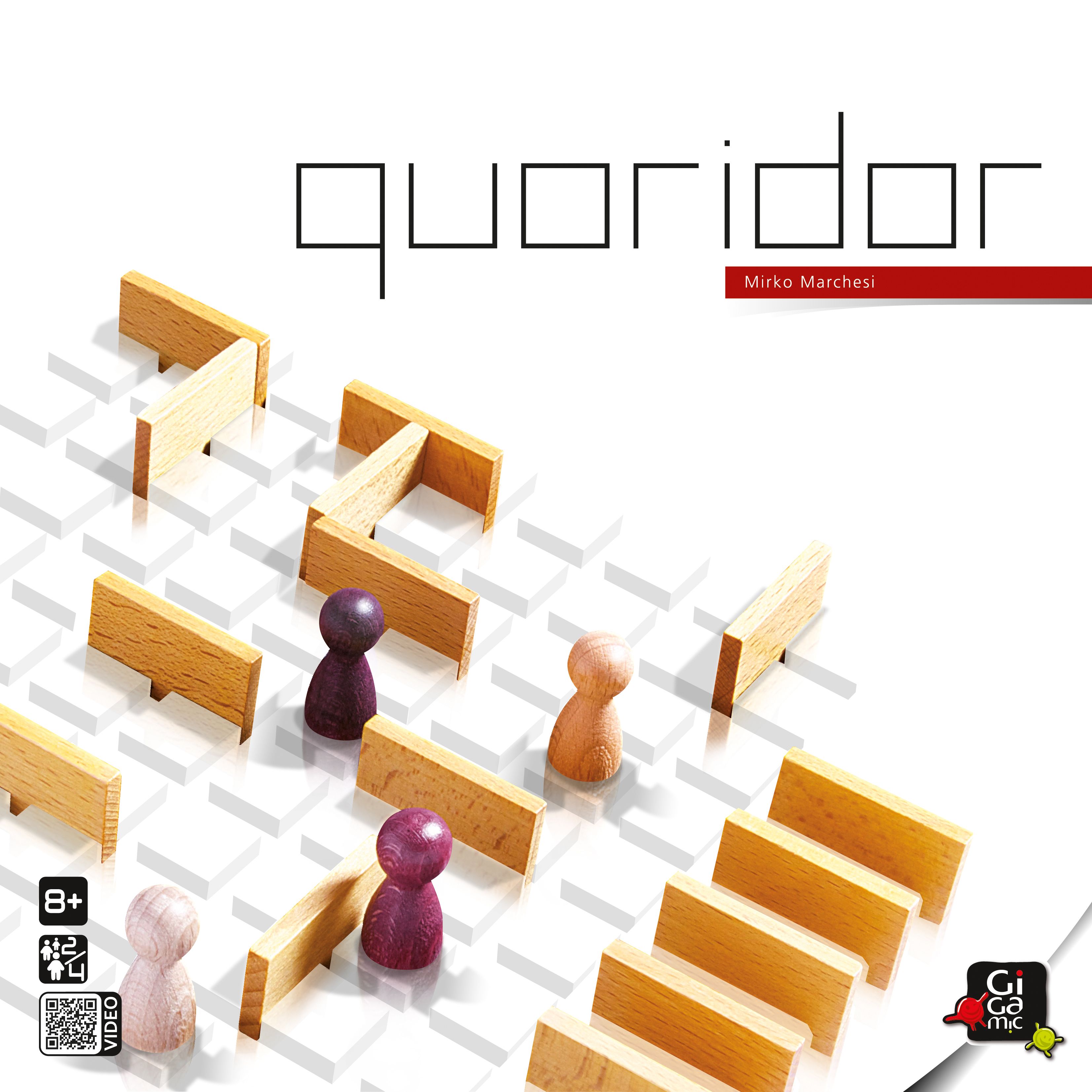
Quoridor
The abstract strategy game Quoridor is surprisingly deep for its simple rules. The object of the game is to advance your pawn to the opposite edge of the board. On your turn you may either move your pawn or place a wall. You may hinder your opponent with wall placement, but not completely block them off. Meanwhile, they are trying to do the same to you. The first pawn to reach the opposite side wins.
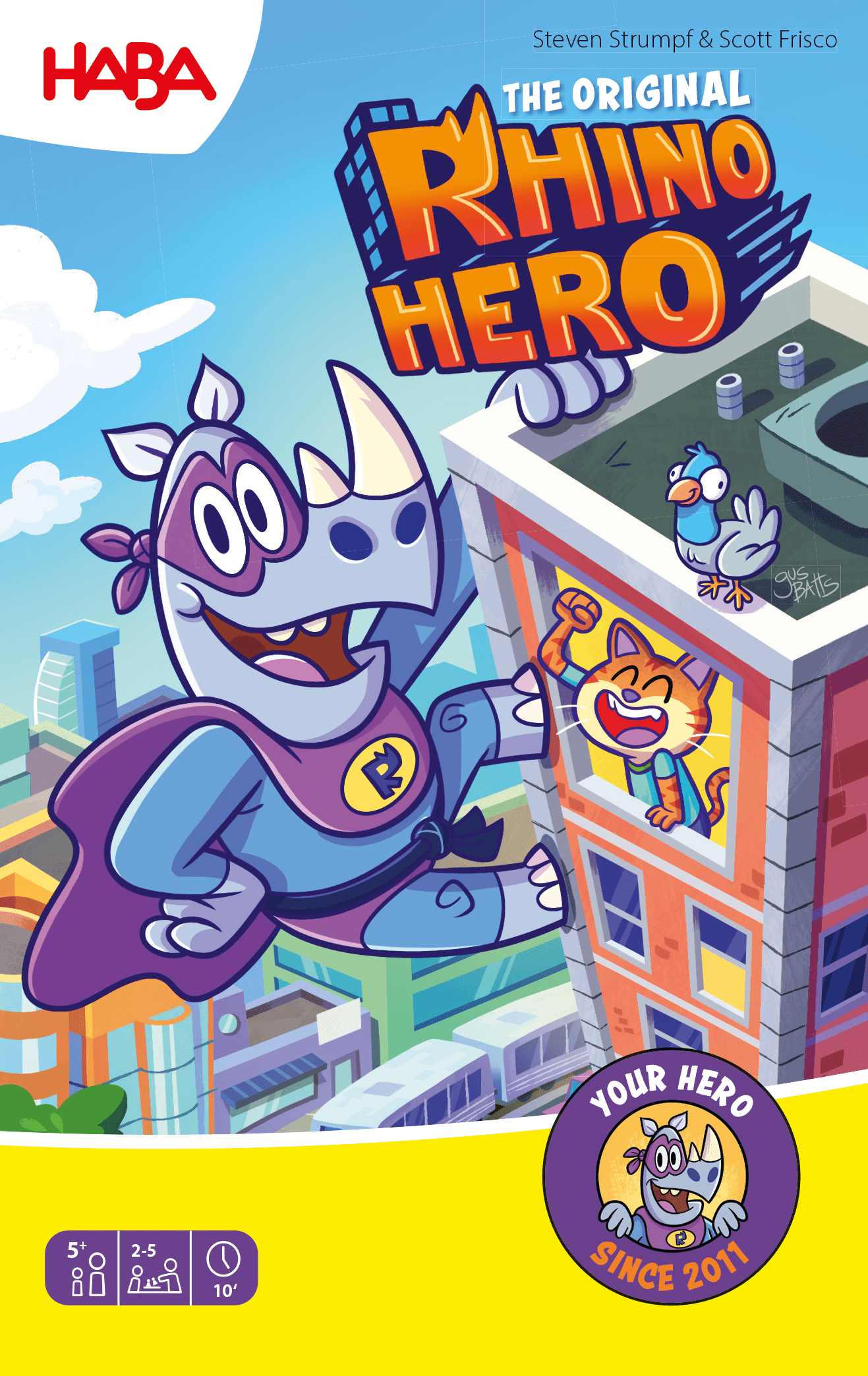
Rhino Hero
Super Rhino! presents players with an incredibly heroic – and regrettably heavy – rhinoceros who is eager to climb a tall building and leap other tall buildings in a single bound. First, though, you need to construct that building. Players each start the game with five roof cards, and they take turns adding walls and roofs to a single building. On a turn, you first place walls on the highest floor, then you choose a roof card in your hand and place it on the wall. Each roof card bears markings that indicate where the next player must place walls on the card. In addition, some roof cards force a player to perform special actions, such as placing a second roof, changing the direction of play, or moving Super Rhino to a new location on the tower. Keep your hands steady! The first player to build all of their roof cards wins the game. Alternatively, if the building collapses, the player who caused the collapse automatically loses, and the player with the fewest roof cards in hand wins.
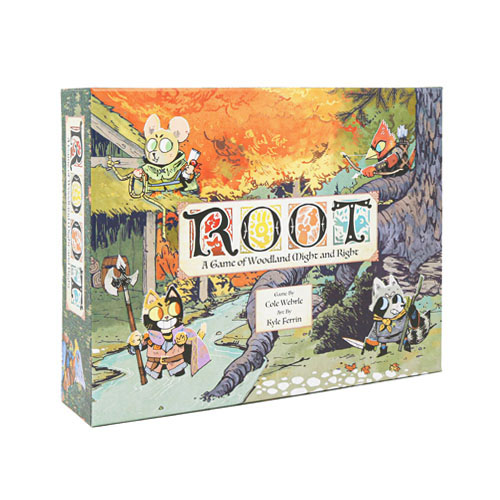
Root
Root is a game of adventure and war in which 2 to 4 (6 with the 'Riverfolk' expansion) players battle for control of a vast wilderness. The nefarious Marquise de Cat has seized the great woodland, intent on harvesting its riches. Under her rule, the many creatures of the forest have banded together. This Alliance will seek to strengthen its resources and subvert the rule of Cats. In this effort, the Alliance may enlist the help of the wandering Vagabonds who are able to move through the more dangerous woodland paths. Though some may sympathize with the Alliance's hopes and dreams, these wanderers are old enough to remember the great birds of prey who once controlled the woods. Meanwhile, at the edge of the region, the proud, squabbling Eyrie have found a new commander who they hope will lead their faction to resume their ancient birthright. The stage is set for a contest that will decide the fate of the great woodland. It is up to the players to decide which group will ultimately take root. Root represents the next step in our development of asymmetric design. Like Vast: the Crystal Caverns, each player in Root has unique capabilities and a different victory condition. Now, with the aid of gorgeous, multi-use cards, a truly asymmetric design has never been more accessible. The Cats play a game of engine building and logistics while attempting to police the vast wilderness. By collecting Wood they are able to produce workshops, lumber mills, and barracks. They win by building new buildings and crafts. The Eyrie musters their hawks to take back the Woods. They must capture as much territory as possible and build roosts before they collapse back into squabbling. The Alliance hides in the shadows, recruiting forces and hatching conspiracies. They begin slowly and build towards a dramatic late-game presence--but only if they can manage to keep the other players in check. Meanwhile, the Vagabond plays all sides of the conflict for their own gain, while hiding a mysterious quest. Explore the board, fight other factions, and work towards achieving your hidden goal. In Root, players drive the narrative, and the differences between each role create an unparalleled level of interaction and replayability. Leder Games invites you and your family to explore the fantastic world of Root!
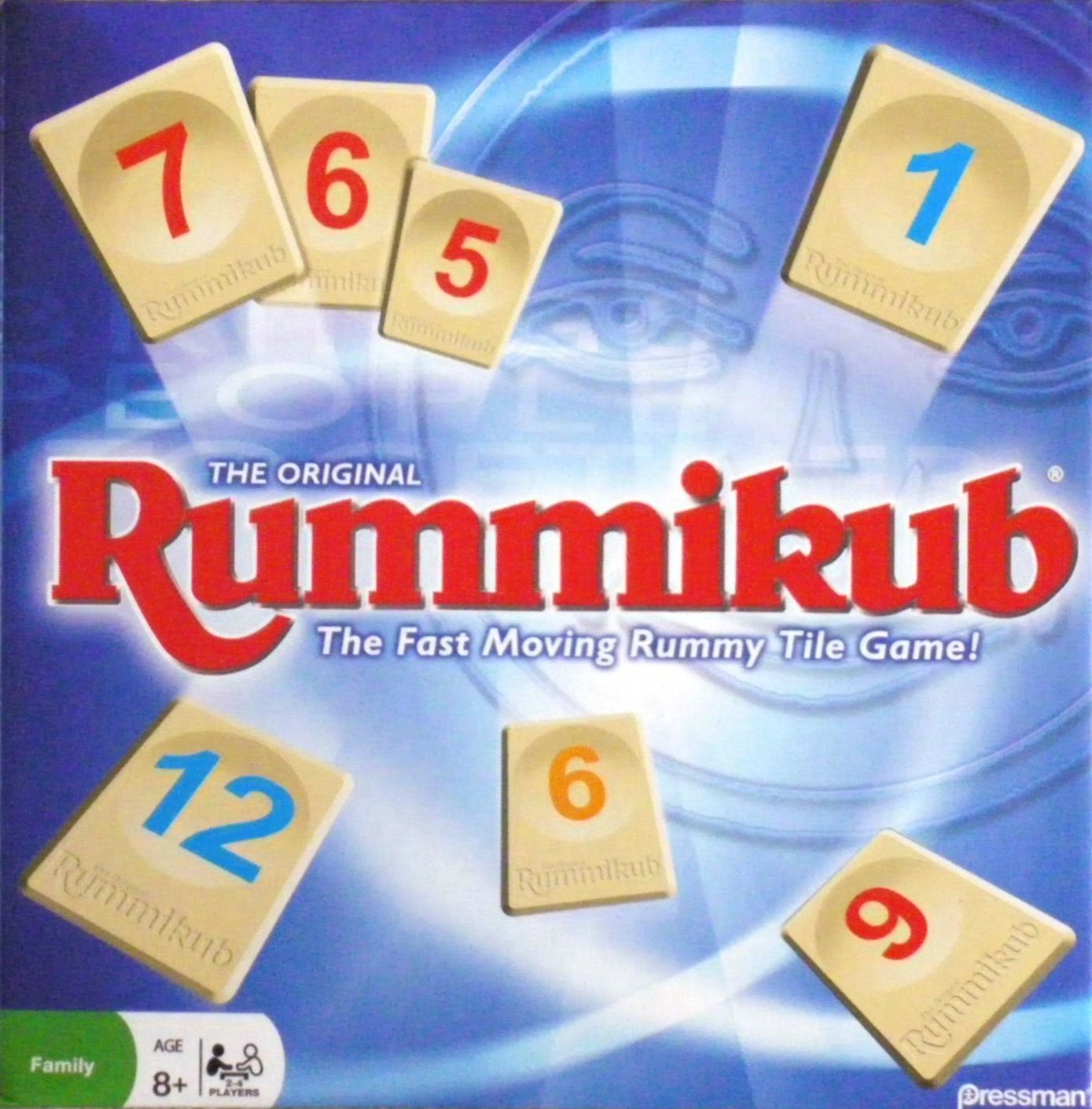
Rummikub
Rummikub is similar to several central European card games which are played with two decks of playing cards, including Machiavelli and Vatikan. Ephraim Hertzano invented the tile game Rummikub in the 1940s when card-playing was outlawed under the Communist regime. After World War II, Hertzano immigrated to British Mandate of Palestine (now Israel) and developed the first sets with his family. Over the years, the Hertzano family licensed it to other countries and Rummikub became Israel's best-selling export game. Hertzano's Official Rummikub Book, published in 1978, describes three different versions of the game: American, Sabra, and International. Modern Rummikub sets include only the Sabra version rules, with no mention of the others, and there are variations in the rules between publishers. In Turkey, the game is known as Okey and is widely played by families at gatherings or at local cafes. Like Rummy that you play with cards, you try to get rid of all your tiles by forming numbers into runs of 3 tiles or more, or 3 to 4 of a kind. The colors of the numbers on the tiles are like card suits. This game may start rather uneventfully, but when the players start putting more and more tiles in play, the options for your upcoming turns can become more complex, challenging, and exciting (from areyougame.com).
Saboteur
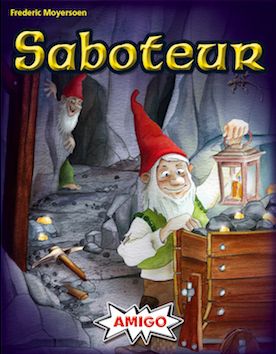
Players take on the role of dwarves. As miners, they are in a mine, hunting for gold. Suddenly, a pick axe swings down and shatters the mine lamp. The saboteur has struck. But which of the players are saboteurs? Will you find the gold, or will the fiendish actions of the saboteurs lead them to it first? After three rounds, the player with the most gold is the winner. With the help of Dwarf Cards, the players are assigned their role: either miner or saboteur. The roles are kept secret- they are only revealed at the end of the round. The Start Card and the three Goal Cards are placed onto the table, each seven cards away from the start and one card between each Goal Card. The Goal Cards are placed face-down. The gold is on one of the Goal Cards, but nobody knows which. Players have cards in hand. On a player's turn, he must do one of three things: place a Path Card into the mine, play an Action Card in front of a player, or pass. The Path Cards form paths leading to the Goal Cards. Path Cards must be played next to a already-played Path Card. All paths on the Path Card must match those on the already-played cards, and Path Cards may not be played sideways. The miners are trying to build an uninterrupted path from the Start Card to a Goal Card, while the saboteurs are trying to prevent this. They shouldn't try and be too obvious about it, however, lest they be immediately discovered. Action Cards can be placed in front of any player, including oneself. Action Cards let the players help or hinder one another, as well as obtain information about the Goal Cards. Once a player places a Path Card that reaches the gold, the round is over. The miners have won and receive cards with gold pieces as their reward. The round is also over if the gold could not be reached. In that case, the saboteurs have won and receive the gold pieces. Once the Gold Cards have been distributed, the next round begins. The game is over at the end of the third round, with the player with the most gold pieces being the winner.
Sagrada
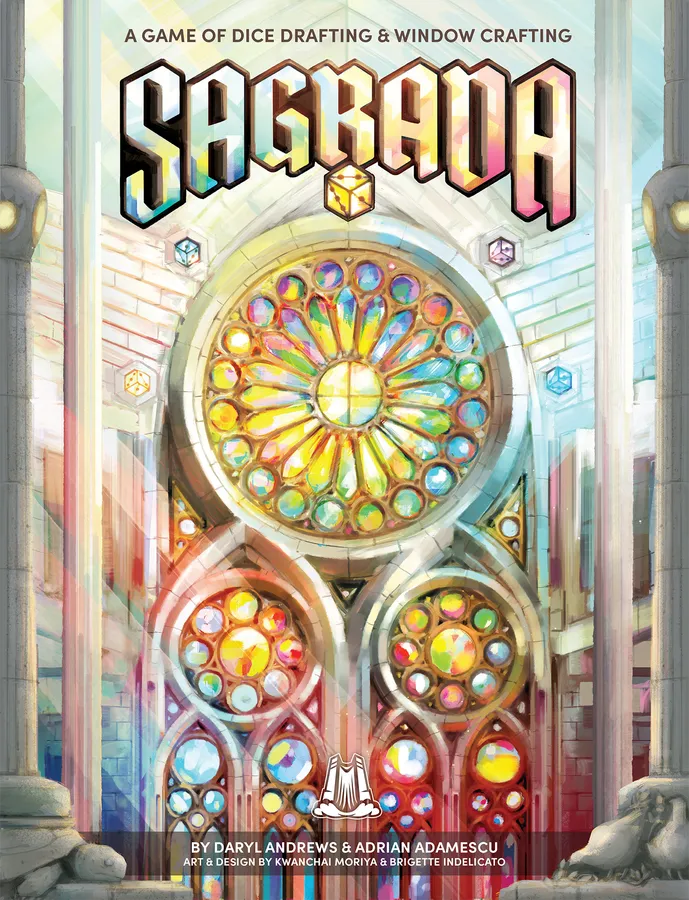
Draft dice and use the tools-of-the-trade in Sagrada to carefully construct your stained glass window masterpiece. In more detail, each player builds a stained glass window by building up a grid of dice on their player board. Each board has some restrictions on which color or shade (value) of die can be placed there. Dice of the same shade or color may never be placed next to each other. Dice are drafted in player order, with the start player rotating each round, snaking back around after the last player drafts two dice. Scoring is variable per game based on achieving various patterns and varieties of placement...as well as bonus points for dark shades of a particular hidden goal color. Special tools can be used to help you break the rules by spending skill tokens; once a tool is used, it then requires more skill tokens for the other players to use them. The highest scoring window artisan wins!
Save The Dragon
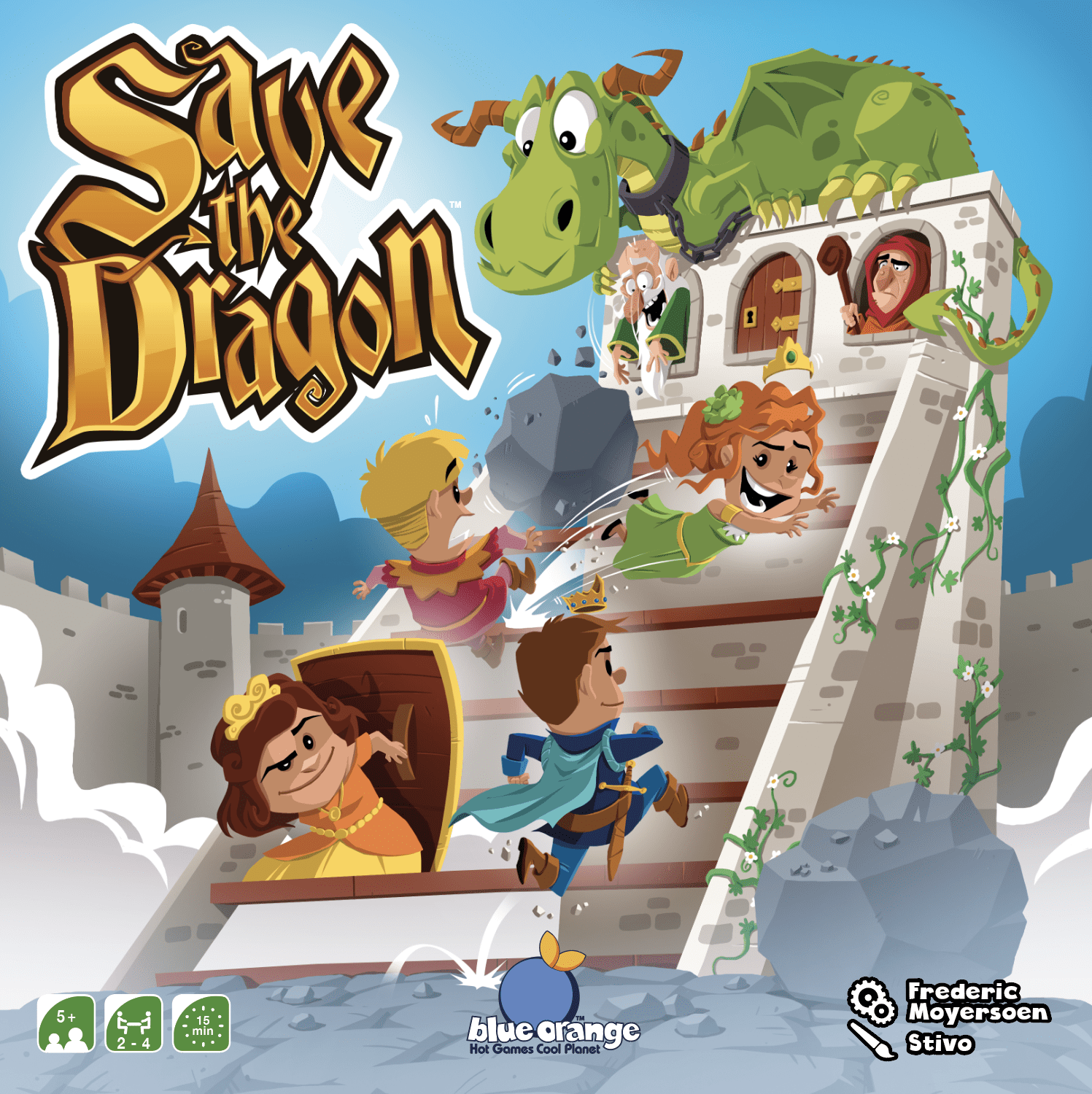
Climb the big staircase of the dungeon to save this poor dragon! Legend has it that whoever succeeds in freeing the dragon will be pronounced the savior of the kingdom, but this dragon is guarded by evil sorcerers who launch enormous boulders to keep would-be adventurers away. Dodge obstacles, protect yourself behind shields, and be the first climb to the top to Save the Dragon!